Have you ever wondered how goods move from the point of production to the final consumer?
The story begins long before shipping.
Companies that operate in multiple markets or transport goods between different countries are well aware that every minute of delay incurs additional costs.
Speed isn't a bonus, but it's the foundation of success.
This is where freight and distribution management play a crucial role.
It's the vital nerve that maintains the smooth flow of goods from the factory to the customer.
It's also the foundation that keeps investments between countries going.
Any delay or problem in cargo management and logistics can scuttle relationships between different companies, rendering them untrustworthy.
You certainly want to expand your investments and partnerships, so you care about freight management services and ensuring they are executed efficiently.
We'll help you with that.
What is Freight Distribution?
Freight and distribution management is the process that ensures the efficient and safe movement of goods from their source to their final destination, whether within a country or across borders.
It's not just transportation; it's the complete coordination of several elements: transportation, customs clearance, scheduling, and delivery.
Simply put, it transforms logistical chaos into an integrated system, and we understand that's what your company strives for.
How does freight and distribution management work in practice?

The cargo journey typically begins with the factory or supplier, but it goes through several interconnected stages:
Planning:
Determines the optimal route and type of transportation and estimates the cost and time.
Execution:
Loading the goods, managing customs documents, and coordinating with transportation and shipping companies.
Tracking and Control:
Monitoring the shipment's movement in real time and handling any delays or changes in route.
Distribution and Delivery:
Delivering goods on time to distributors or end customers.
Each stage requires precise detail and coordination between multiple parties, from the supplier and carrier to the customs team and the recipient.
The Importance of Freight and Distribution Management in Supply Chains
Cargo management and logistics are not just an operational step; it is a strategic element that impacts all aspects of the business:
- It reduces transportation and storage costs.
- It improves on-time delivery, which increases customer satisfaction.
- It increases operational transparency, especially in cross-border shipping.
- It supports sustainability by optimizing transportation routes and reducing waste.
Companies that invest in effective freight management can anticipate and avoid challenges, rather than discovering them after it's too late.
What Do Companies Gain from Effective Freight & Distribution Management?
When companies invest in an integrated freight and distribution management system, the result is not just "faster deliveries," but a real transformation in business efficiency and profitability.
Reduced operational costs:
Through intelligent route planning, reduced empty transportation, and avoided customs delays.
This means less money wasted on fuel, storage, and late fees.
Improved delivery accuracy and scheduling:
When every step of the transportation process is connected, the likelihood of delays or loss is reduced.
The result? Satisfied customers and increased confidence in supply.
Increased transparency and control:
With real-time tracking and performance reports, management has complete visibility into every shipment and every cost.
This helps make faster and more accurate decisions.
Enhancing competitiveness:
Companies that can deliver faster, cheaper, and more reliably are the ones winning the market.
Partners and importers prefer to deal with suppliers with a stable and reliable shipping system.
Sustainability and reducing environmental impact:
By optimizing routes and avoiding excess transportation, the company reduces fuel consumption and emissions, which not only saves money but also enhances its image as a responsible and sustainable company.
Challenges Facing Companies
During the shipping, freight, logistics, and supply chain management process, companies face several challenges, such as:
1. Multiple parties: Dealing with more than one carrier or intermediary increases the chances of errors and delays.
2. Complex customs procedures: Especially in regions such as the Balkans, the European Union, and the Middle East.
3. Lack of transparency: Difficulty tracking shipments or accurately determining true costs.
4. Regional differences: Each country has different regulations, which impact shipping speed.
This highlights the market's need for a partner who understands regional details and provides integrated solutions.
How to Overcome Freight & Distribution Challenges
Logistics challenges aren't always caused by errors, but often by a lack of coordination and integration across the supply chain.
Therefore, the solution isn't to add a new supplier or change routes, but rather to choose a logistics partner who understands the whole picture, from planning to final delivery.
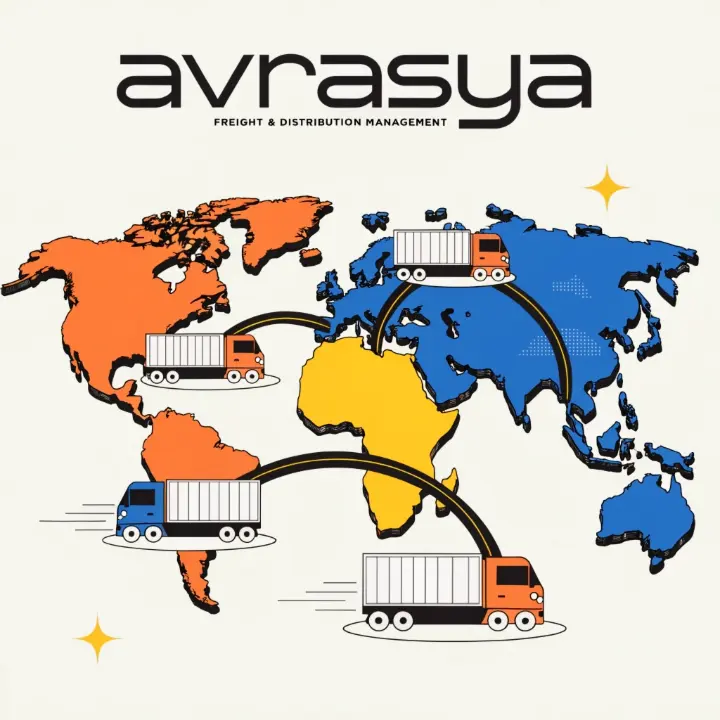
Companies that can control the supply chain from start to finish are the ones that gain both trust and market share.
Imagine your company moving seamlessly between ports and borders, every step calculated, every shipment arriving on time, without confusion or hidden costs.
This is a reality that can be achieved when you find a partner who understands the challenges and knows the way.